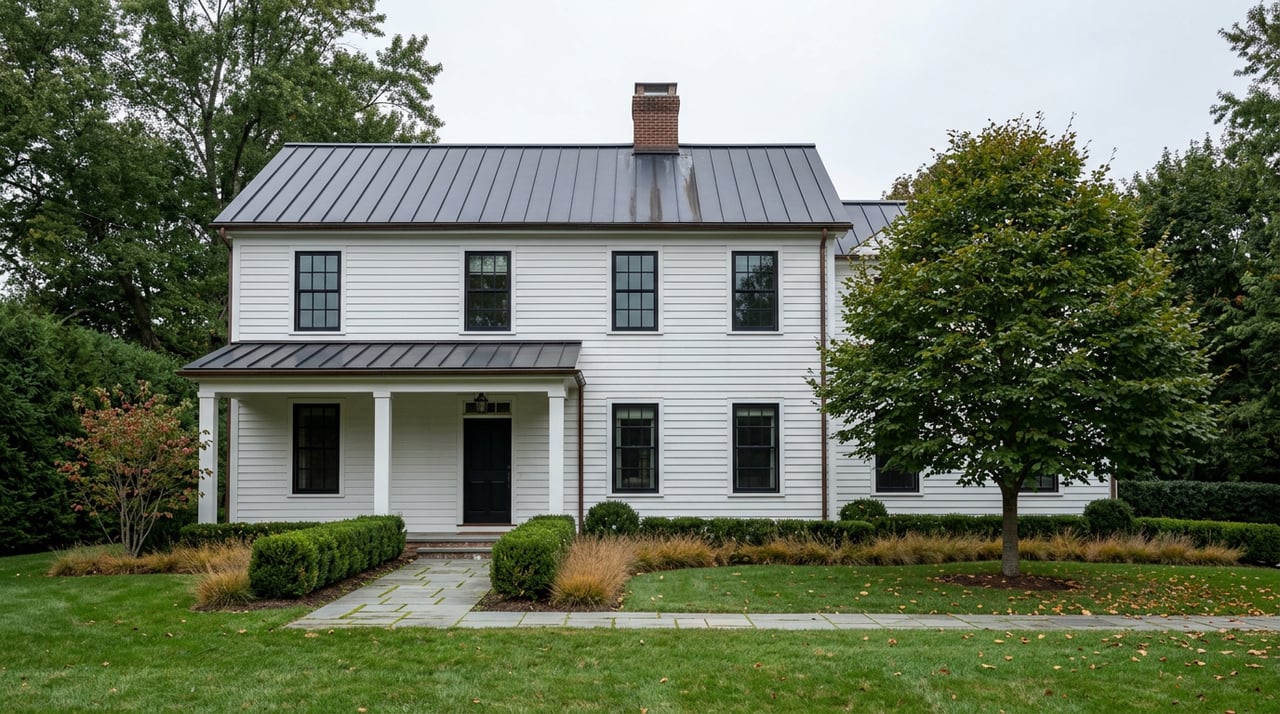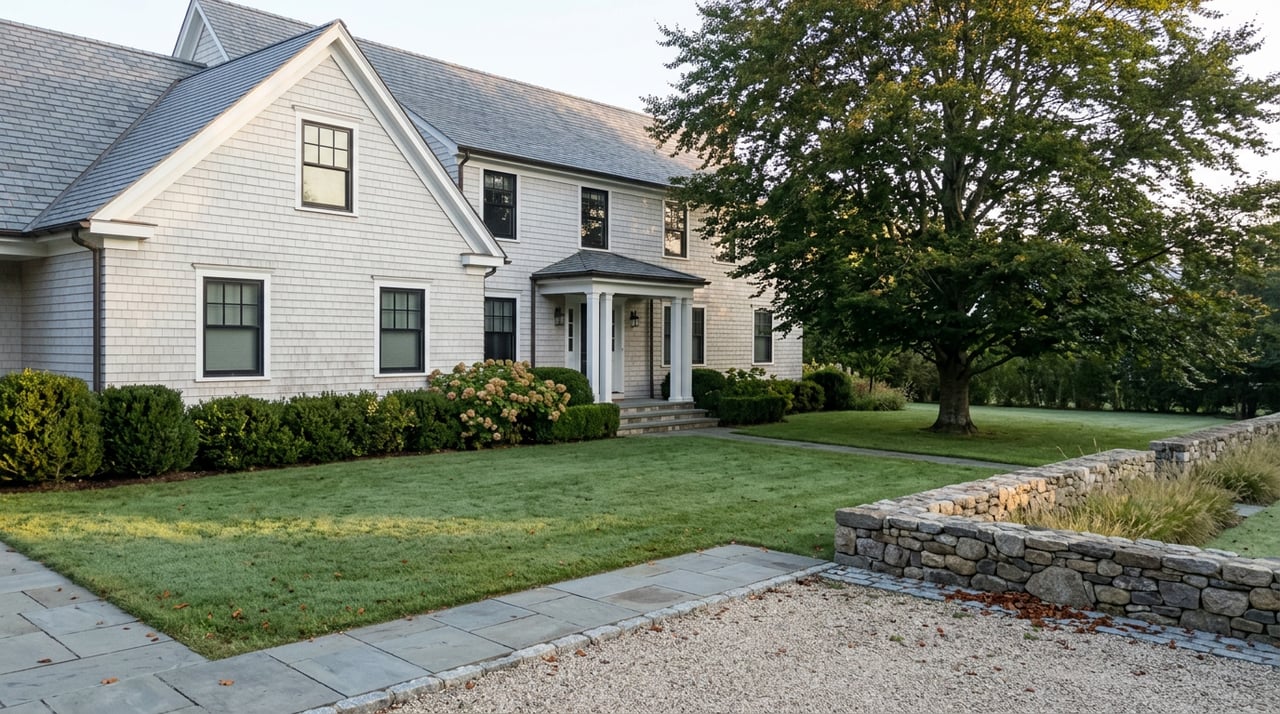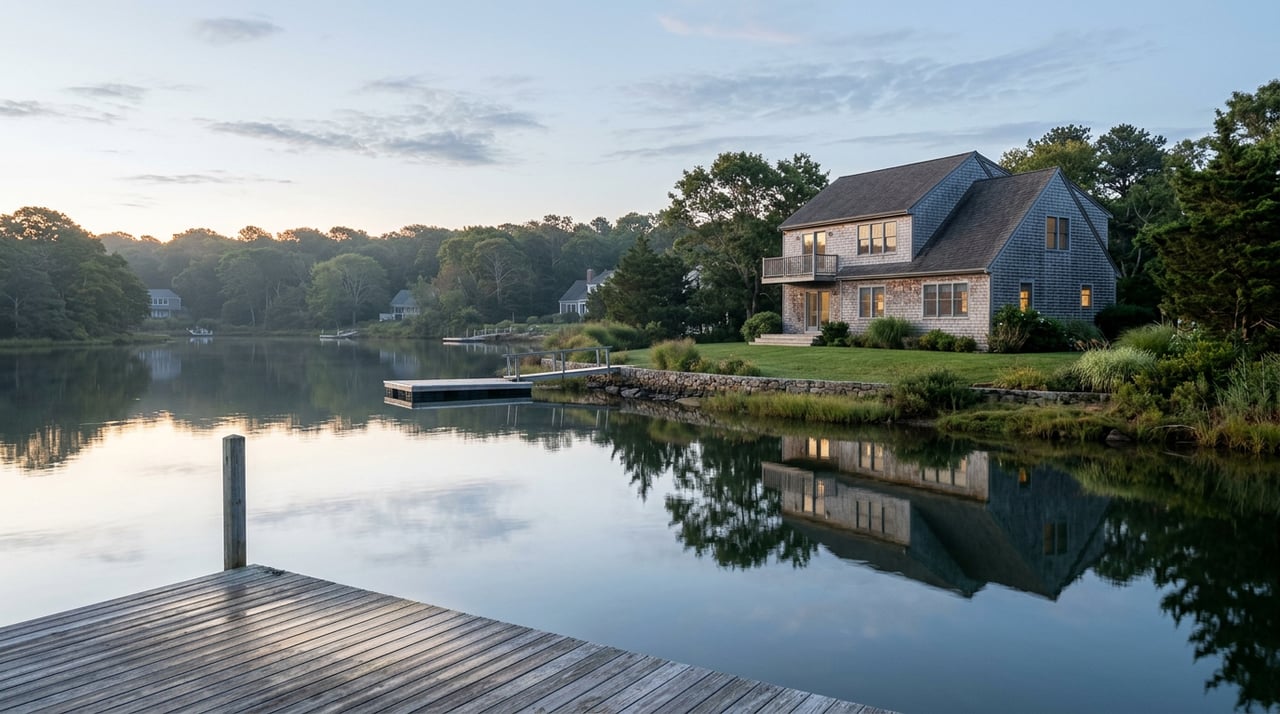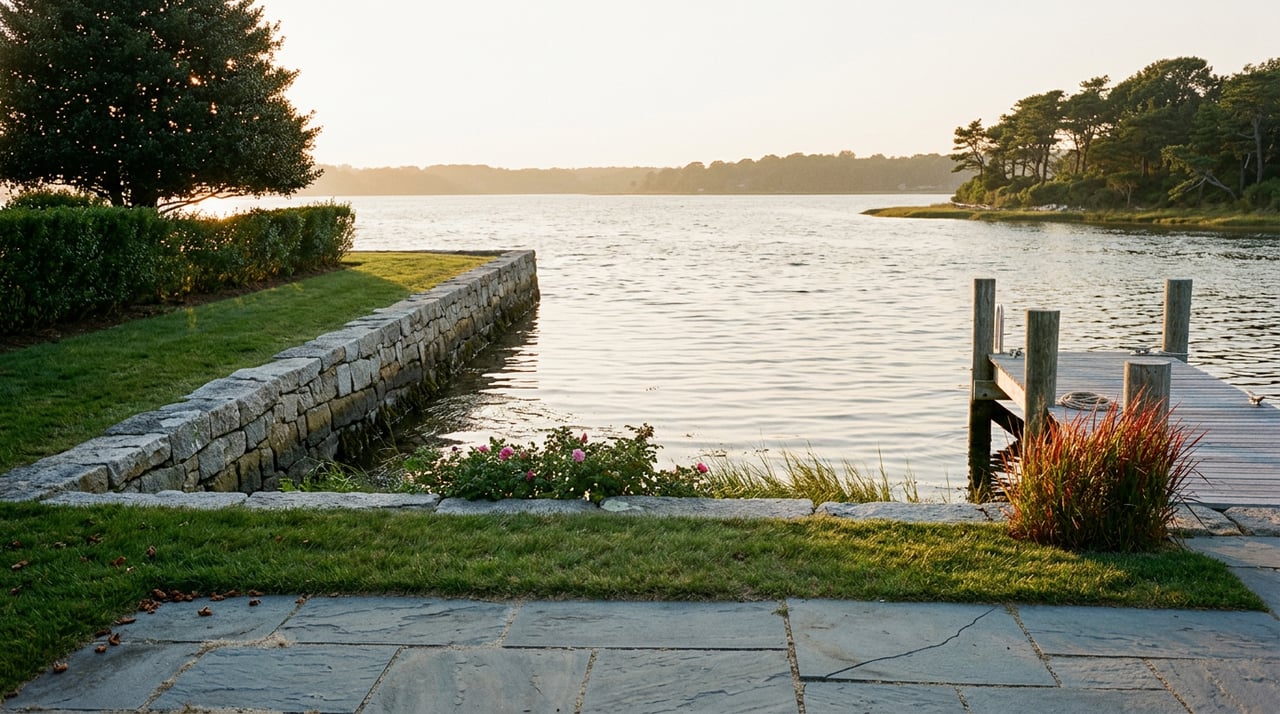
Two houses on Dolphin Cove Quay can sit less than a hundred yards apart, share the same lagoon view, and carry entirely different sets of obligations. One might come with a modest annual charge that covers little more than mowing and snow removal. The other might include tennis, two pools, a private beach, and a 200-person pavilion. A third might belong to a completely separate association a few blocks over that happens to overlap with the first. None of this shows up in the listing photos, and very little of it shows up in the price.
"Dolphin Cove" is not one governing body. It is a place name that sits on top of at least three private associations and a fourth, entirely separate boating entity, and any given address can belong to one, two, or a combination of them. For a buyer comparing homes by square footage and water frontage, that distinction is easy to miss. For a buyer who has already gone under contract and discovered the actual bylaws, it can be a genuine surprise.
The name covers more ground than one association
Start with the Davenport Point Waterfront Association, a private community of roughly fifty homes that grants members boat launch, dock, and mooring rights along this stretch of the Stamford waterfront. Some properties marketed under the Dolphin Cove name sit within this association's boundaries. Others don't.
Separately, there is the Dolphin Cove Club itself, a community-owned amenity area built around two pools with a cabana, private beach access, a tennis court, and a pavilion large enough to host gatherings of up to 200 people. Membership in this club is its own arrangement, distinct from Davenport Point.
Then there is Southfield Point Association, on the adjoining peninsula. Southfield Point and Davenport Point share deeded water rights to a common amenity known as the Plaza, which holds 21 boat slips. The two associations jointly publish rules governing how those slips are allocated, and residents who want one typically join a waiting list and post a refundable bond that comes back when they leave.
And finally there is the Dolphin Cove Yacht Club Corporation, a nonprofit entity in its own right, chartered specifically to run boating and dockage on the Lagoon. Its public nonprofit filing confirms it as a distinct organization from the residential associations around it. Membership here is billed by the foot: $30 per foot, or $900 a year for a 30-foot boat in a slip, a cost that stacks on top of whatever association dues a homeowner already pays.
The overlap is not theoretical. Listing records for at least one Davenport Drive property describe a home that belongs to both the private Southfield Point Association and the Dolphin Cove Club at once, layering beach access, dock slips, a 60-foot pool with cabana, and tennis and pickleball courts under two separate memberships. Another listing places its address just over the Old Greenwich line while still describing itself as part of the Davenport Point Waterfront Association, a reminder that these boundaries don't track neatly with town lines either.
What that means for carrying cost
Two things follow from this structure, and both matter before an offer goes in.
First, dues are not uniform. One condo on Dolphin Cove Quay carries a $700 annual association fee that covers landscaping and snow removal and nothing else. A single-family home a few doors down, if it also belongs to the Dolphin Cove Club, carries dues that include grounds maintenance, road maintenance, pool service, tennis, and lake or beach access. Those are not comparable numbers, even though both properties sit under the same neighborhood name in a search result.
Second, boat access is its own line item. A homeowner might already pay association dues that include "dock access" in the marketing copy, and still owe a separate per-foot fee to the Yacht Club Corporation to actually put a boat in a slip. Buyers who assume the water access described in a listing is bundled into one number are often working from an incomplete picture.
Here is how the four entities compare at a glance:
| Entity | What it governs | What it typically includes | Boat access mechanism |
|---|---|---|---|
| Davenport Point Waterfront Association | Roughly 50 homes on the association's side of the peninsula | Boat launch, dock, and mooring rights; grounds and road upkeep | Rights included in association membership |
| Southfield Point Association | Adjacent peninsula, historic private enclave | Deeded water rights, shared Plaza access | Shared 21-slip Plaza, waiting list plus refundable bond |
| Dolphin Cove Club | Community-owned amenity grounds | Two pools with cabana, private beaches, tennis court, 200-person pavilion | Not boat-specific |
| Dolphin Cove Yacht Club Corporation | Marina operations on the Lagoon | Slips and moorings | Per-foot fee, roughly $30/ft or $900/year for a 30-ft boat |
The flood-zone layer adds a second track of diligence
Association membership determines lifestyle access and recurring dues. A separate question, tied to the physical property rather than its governance, determines long-term insurability: which FEMA flood zone the structure sits in and whether it was built to current standards.
Shippan Point, the broader waterfront neighborhood that includes Dolphin Cove, sits in FEMA Zone VE, the highest-risk coastal designation, which carries stricter elevation and construction requirements than the AE zones that cover downtown Stamford, the South End, and Waterside behind the Hurricane Barrier. Connecticut's building code has incorporated the ASCE 24-21 flood-resistant design standard, which affects foundation type, required elevation above base flood level, and how mechanical systems are placed.
This is why listing descriptions in the neighborhood so often lead with construction year. A colonial built in 2004 or a shore colonial built in 2007, both explicitly marketed as FEMA compliant, are making a specific claim about foundation elevation and materials that older waterfront housing stock in the same zone may not meet. That claim affects flood insurance premiums and, eventually, resale positioning. A buyer comparing two similar-looking waterfront homes should ask the construction year and compliance status as directly as they ask about the roof and the mechanicals, since the answer touches ongoing carrying costs long after closing.
Stamford's Environmental Protection Board maintains flood zone determination resources that can confirm a specific address's designation before an offer is written, rather than relying on a listing's characterization of the flood zone.
What to ask before writing an offer
For a buyer who has found a Dolphin Cove home worth pursuing, a short list of questions at the offer stage does most of the work:
- Which association or associations does this specific address belong to, and are the current dues and inclusions documented in writing?
- Does membership include Plaza or dock access, or is that a separate arrangement through the Yacht Club Corporation?
- If a boat slip is part of the appeal, is one currently available, or does it require a waiting list and bond?
- What year was the structure built or substantially renovated, and does the seller have documentation of FEMA compliance?
- What is the current flood zone designation for this exact parcel, confirmed independently rather than taken from the listing description?
None of these questions are unusual to ask in a coastal transaction. What makes Dolphin Cove specific is that the answers genuinely vary address by address within what looks, from the outside, like a single named community.
A few common questions
Does every home in Dolphin Cove come with a boat slip? No. Dock and mooring rights depend on which association a property belongs to, and even where rights exist, actual use of a slip may require joining the Yacht Club Corporation separately and, in the case of the shared Plaza, going on a waiting list.
Do association memberships transfer automatically when a home sells? Association membership is typically tied to the property rather than the individual seller, but the specific transfer process, any assumption fees, and whether a boat slip stays with the deed or reverts to the waiting list should be confirmed with the relevant association before closing, not assumed.
Why does construction year matter so much for waterfront homes here? Because the neighborhood sits in FEMA Zone VE, homes built or substantially rebuilt to meet current elevation and material standards carry different insurance profiles than older structures in the same flood zone. Construction year is a proxy for compliance, which is why sellers highlight it directly in listings.
Sorting through which association applies, what it actually includes, and whether a property meets current flood compliance standards is the kind of groundwork that belongs before an offer, not after an inspection contingency runs out. Joshua Weisman has spent years tracking exactly these distinctions along the Shippan Point and Dolphin Cove waterfront. If you're comparing specific addresses in this neighborhood, reach out for a Free Home Valuation and a clear read on what a given property's association and flood status actually mean for your offer.