By Joshua Weisman
The way a home is designed has a direct effect on how well you sleep in it, going considerably deeper than simply having a comfortable mattress. Light, temperature, sound, and the arrangement of spaces where you wind down all influence the quality of rest you get each night. For homeowners in Shippan Point, where waterfront settings, open floor plans, and older architectural details can work either for or against good sleep, understanding how to design a sleep-friendly home is useful knowledge whether you are renovating, staging to sell, or making the most of what you have.
Key Takeaways
- Light management is the single most important environmental factor in sleep quality, and blackout curtains, warm-toned bulbs, and strategic lighting controls make a measurable difference
- Temperature between 65 and 68 degrees Fahrenheit is consistently identified as the optimal range for restful sleep, making bedroom climate control worth prioritizing
- Sound management matters especially in waterfront and city-adjacent homes, where environmental noise from Long Island Sound, nearby roads, or neighbors can disrupt sleep cycles
- The bedroom should function as a single-purpose space; a room designed and used exclusively for sleep and rest consistently produces better sleep outcomes than one that doubles as a workspace or entertainment room
Control Light More Deliberately
Light is the most powerful environmental signal the body uses to regulate its sleep-wake cycle, and most homes are not designed with that reality in mind. Exposure to bright or blue-toned light in the two hours before bed suppresses melatonin and delays sleep onset, while complete darkness during sleeping hours supports deeper rest. The design decisions that address this are straightforward: blackout curtains, warm-toned bulbs in evening living spaces, and dimmers that allow gradual transitions rather than abrupt ones.
Light Management Changes Worth Making
- Install blackout curtains or cellular shades
- Replace cool-toned bulbs in bedrooms and evening living areas with warm-toned options in the 2700K to 3000K range, which signal to the body that the day is ending
- Add dimmers to bedroom and living room lighting so the transition to sleep can be gradual rather than abrupt
- East-facing bedroom windows make blackout coverage particularly important given early morning light off the water
Optimize Bedroom Temperature
Temperature is the second most important environmental variable in sleep quality, and the optimal sleeping range of 65 to 68 degrees Fahrenheit is significantly cooler than most people keep their homes during waking hours. The body's core temperature drops naturally during sleep, and a cool bedroom supports that process while a warm one works against it. In a coastal home on Long Island Sound, summer humidity and winter heating can work against optimal conditions if the bedroom is not specifically managed.
Temperature Controls That Support Better Sleep
- Set the bedroom thermostat to drop to 65 to 68 degrees for sleeping hours, even if the rest of the home stays warmer in the evening
- Install a programmable or smart thermostat scheduled to cool the bedroom automatically before bedtime rather than requiring a manual adjustment each night
- Use breathable natural fiber bedding rather than synthetic materials that trap heat and disrupt temperature regulation
- In coastal homes where sea breezes provide natural cooling, consider reversible window treatments allowing full airflow in cooler months and full coverage in warmer ones
Manage Sound in Your Environment
Sound is the factor that most directly disrupts sleep once it has begun, and it is particularly relevant along Shippan Point and coastal Stamford, where the sounds of Long Island Sound can range from deeply soothing to disruptive. Managing bedroom sound is not about eliminating all noise but controlling its variability, since sudden or irregular noise interrupts sleep far more reliably than consistent ambient sound.
Sound Management Strategies for Connecticut Coastal Homes
- A white noise machine or fan at consistent volume masks irregular sounds far more effectively than silence, which amplifies contrast when sudden sounds occur
- Heavy curtains, upholstered furniture, and area rugs absorb sound and reduce the reverberant quality that makes hard-surface rooms feel louder at night
- Solid-core bedroom doors reduce sound transfer more effectively than hollow-core alternatives
- If wind noise from the Sound is a consistent issue, examining window seal quality and considering acoustic inserts can reduce intrusion without replacing the windows
Design the Bedroom as a Single-Purpose Space
The most consistent finding in sleep research is that people sleep better in bedrooms that function exclusively as sleeping spaces. Bedrooms containing televisions, desks, or working technology create associations with wakefulness that counteract the sleep-promoting cues the brain needs. For sellers, a bedroom that reads clearly as a restful retreat photographs and shows better than a multi-use room, and in a market like Shippan Point, where buyers are paying a premium for lifestyle, that difference registers.
How to Design the Bedroom Around Rest
- Remove working technology from the bedroom, as laptops, monitors, and work materials signal to the brain that the space is for productive activity, conflicting with the wind-down association the room needs
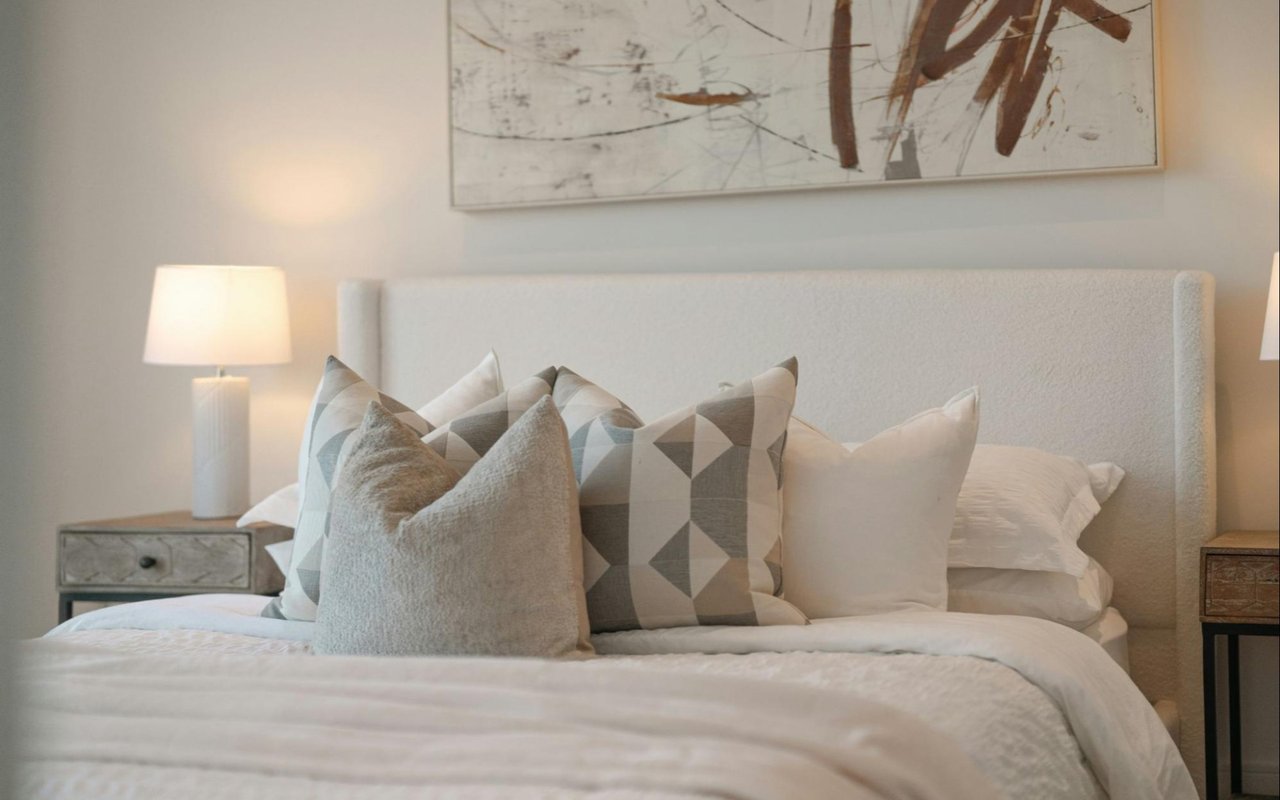
- Keep the palette calm and low-saturation with warm neutrals and soft greiges to reduce visual stimulation
- Eliminate clutter from surfaces and floor space, as a visually busy environment activates the brain rather than allowing it to disengage for sleep
- If space requires a home office in the bedroom, use a divider, curtain, or furniture placement to visually separate the working area from the sleeping area
FAQs
Does bedroom design actually affect sleep quality measurably?
Yes. Light, temperature, and sound management have all been shown in clinical sleep research to affect both sleep onset time and overall sleep quality. The changes described here are not aesthetic preferences; they are backed by documented sleep medicine outcomes.
How does this apply to sellers preparing a home for the market?
A bedroom staged around sleep-friendly principles photographs and shows better than a multi-use room. In Shippan Point, where buyers pay a premium for lifestyle, a primary bedroom that reads as a sanctuary contributes meaningfully to overall buyer perception.
What is the highest-impact single change for someone who cannot do a full redesign?
Blackout curtains and a white noise machine. Together they cost under $200 and address the two most common environmental disruptors — light and irregular sound — without requiring any permanent modifications.
Contact Joshua Weisman Today
The homes that sell best in this market are the ones that feel right from the moment a buyer walks in. Reach out to me through Joshua Weisman when you are ready to talk about what your home can be.