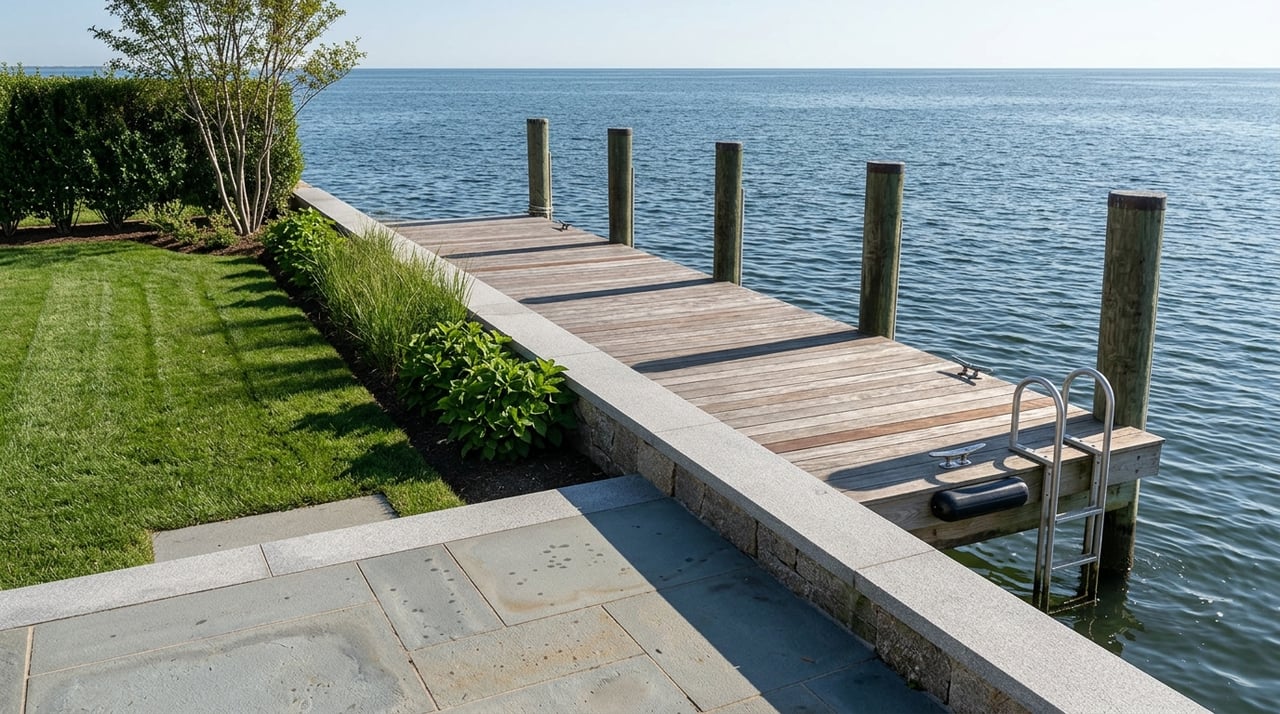
If you have ever wondered why two homes in Shippan Point with similar square footage can sell at very different prices, the answer usually sits outside the walls. In a waterfront neighborhood, buyers are not just paying for bedrooms and finishes. They are weighing views, boating access, shoreline condition, flood exposure, and how the property feels day to day. This is exactly where value gets more nuanced, and where a clear understanding of Shippan Point can help you make a smarter move. Let’s dive in.
Why Shippan Point Commands Attention
Shippan Point operates as a distinct coastal submarket within Stamford. As of May 2026, Realtor.com shows 15 homes for sale, a median listing price of $1,067,500, median days on market of 38, and a median listing price per square foot of $518.
That puts the neighborhood above Stamford’s citywide median listing price of $749,000 and Fairfield County’s $799,999. Even with short-term price swings, the bigger picture still points to a long-run waterfront premium in this part of the market.
Part of that premium comes from the local shoreline setting itself. The City of Stamford identifies the Shippan Avenue, Harbor Drive, and Magee Avenue corridor as a gateway to Shippan Point, Cummings Park and Beach, the Shippan Avenue commercial district, and Shippan Landing, with West Beach and Cummings Park forming a concentrated shoreline amenity zone.
Waterfront Value Is a Bundle
In Shippan Point, waterfront value is rarely about one feature alone. A home’s price is usually shaped by a bundle of traits that work together.
That bundle often includes:
- Open-water view quality
- Direct shoreline frontage
- Dock access or boating utility
- Lot orientation
- Privacy and visual buffer
- Elevation and flood status
- Shoreline condition and existing structures
- Proximity to beach, marina, or shoreline access points
This is why one waterfront or near-water property can outperform another, even when the homes look similar on paper. Buyers tend to assign different value to a view home, a boating home, a beach-access home, and a privacy home.
Views Often Drive Premiums
A strong water view is one of the clearest value drivers in any coastal market. Academic research cited in the report found that wide water views added an average of 59% to the value of a waterfront property.
The practical takeaway for Shippan Point is simple. An unobstructed open-water view will usually carry more appeal than a partial or angled view, especially when interior square footage is otherwise comparable.
View quality is not only about seeing water. Scope, sightlines, and surrounding visual conditions matter too. Research also shows that attractive surroundings can support value, while poor landscaping can reduce it.
Dock Access Can Create Its Own Tier
For some buyers, boating utility is not a bonus. It is a core part of the purchase decision. That can make dockability one of the biggest separators in the neighborhood.
A spatial hedonic study of more than 1,000 waterfront homes found that properties with the ability to build and use a dock carried a statistically significant premium of nearly 45% over undockable properties. In Shippan Point, that makes sense because access to the water is part of the lifestyle buyers are often pursuing.
That said, not every lot with shoreline exposure should be valued as a dock property. Connecticut DEEP regulates residential docks in tidal, coastal, or navigable waters, and a dock needs to be properly permitted and designed in a way that minimizes impacts on navigation, public access, shading, and submerged aquatic vegetation.
Frontage, Orientation, and Privacy Matter Too
Waterfront homes are also shaped by how the lot sits on the shoreline. Frontage and orientation influence how much water you can actually see, how much shoreline the property seems to control, and how exposed the home feels to nearby structures.
In practical terms, two homes with similar frontage may not feel equal to a buyer. One may have a broader view corridor or better visual separation, while the other may feel tighter or more obstructed.
Privacy also tends to be priced indirectly through the setting. Mature landscaping, a stronger buffer from neighbors, and a cleaner visual approach to the water can all support value, even when there is no single line item called “privacy premium.”
Closer to Water Is Not Always Better
One of the easiest mistakes in waterfront pricing is assuming the closest home to the shoreline is automatically worth more. In reality, access and usability can matter just as much as pure distance.
Research in beach markets has separated shoreline access from view value and found that, in some settings, buyers may pay more for homes closer to designated access points even when those properties sit farther back from the shoreline. That idea fits Shippan Point well because this area is connected not only to residential waterfront lots, but also to beaches, marina uses, and shoreline amenities nearby.
For buyers, this means a one-lot-back property may still compete strongly if it offers easier access, lower exposure, or a more practical day-to-day setup. For sellers, it is a reminder not to rely on frontage alone when setting expectations.
Risk Can Narrow the Premium
Waterfront value is powerful, but it is not one-directional. In coastal Connecticut, flood risk, erosion, and storm exposure can affect both buyer demand and the cost of ownership.
Connecticut DEEP notes that coastal properties face erosion and flooding, and also warns that hard shoreline structures such as seawalls and jetties may worsen erosion over time. DEEP’s Shippan Point shoreline-erosion inventory describes this stretch as predominantly private, low-density residential shoreline with fringing beaches, many private seawalls and groins, and residences close to the shore that can be subject to catastrophic storm-erosion damage.
Stamford’s resilience planning materials also identify coastal flooding and stormwater flooding as active local issues. That does not erase the appeal of waterfront living, but it does mean buyers are often evaluating amenity and risk at the same time.
A recent Connecticut study adds an important layer. It found that flood-zone effects varied by financing structure, with mortgage-backed transactions showing an average flood-zone discount of about $8,000, while transactions without a mortgage showed no significant average penalty.
Seawalls and Shoreline Structures Need Context
A seawall or similar shoreline improvement should not automatically be viewed as a value add or a value drag. Its effect depends on condition, maintenance needs, and what it may signal about the shoreline itself.
Some buyers may see protection. Others may focus on erosion history, future repairs, or permitting complexity. DEEP’s shoreline guidance is clear that hard protection measures can have tradeoffs, so these features need to be evaluated in context rather than treated as simple upgrades.
This is especially important in a place like Shippan Point, where private shoreline structures are common. A well-documented shoreline setup can support confidence, while uncertainty can become a negotiation issue quickly.
Permits and Compliance Affect Real Value
In waterfront property, paperwork can influence price almost as much as physical features. Connecticut DEEP regulates activities in tidal wetlands and in tidal, coastal, or navigable waters, and coastal property rights are still limited by permit requirements and the public trust area.
For buyers, this means the question is not just whether a dock, seawall, or other coastal feature exists. The real question is whether it is properly permitted, site-appropriate, and compliant.
For sellers, permit status can shape both pricing and deal certainty. DEEP specifically warns buyers and sellers to verify permit status and floodplain compliance because unpermitted coastal structures remain the current owner’s responsibility.
What Buyers Should Watch in Shippan Point
If you are shopping in Shippan Point, it helps to define what type of waterfront lifestyle you actually want before comparing homes. The right property for you may not be the one with the most dramatic map location.
Ask practical questions like these:
- Is this primarily a view property?
- Is boating access important to your decision?
- How usable is the shoreline today?
- What is the flood status of the property?
- Are shoreline structures documented and permitted?
- Does the lot feel private, exposed, or somewhere in between?
- How close is the property to nearby shoreline amenities?
With only 15 active listings and a median 38 days on market as of May 2026, these feature differences can matter fast. In a thin inventory environment, clarity helps you act with more confidence.
What Sellers Should Watch in Shippan Point
If you are selling, the biggest pricing error is often treating your home like a standard square-footage comparison. Waterfront buyers usually look deeper than the interior finish package.
A better pricing approach looks at the entire shoreline bundle. That includes view quality, frontage, boating utility, flood documentation, shoreline condition, privacy, and the local alternatives currently on the market.
Presentation matters too. If your property has a broad water view, a usable shoreline feature, or a strong orientation to the water, that story should be documented and positioned clearly from the start.
This is where hyperlocal experience can make a real difference. In a niche market like Shippan Point, reading buyer behavior correctly is often just as important as reading the comps.
Why Local Interpretation Matters
Shippan Point is not a neighborhood where generic pricing rules work well. Short-term market movement, limited inventory, and highly specific waterfront features can all shift value from one property to the next.
That is why buyers and sellers benefit from a property-level analysis rather than a broad coastal label. The homes that perform best are often the ones where the value story is understood, documented, and matched to the right buyer expectations.
If you are trying to understand how your home’s waterfront features may affect value, or how to compare two very different properties in Shippan Point, working with someone who knows this submarket block by block can give you a real edge. To talk through your next move, connect with Joshua Weisman.
FAQs
How do water views affect home value in Shippan Point?
- Wide and unobstructed water views usually support stronger value than partial or angled views, and research shows broad water views can be priced materially in waterfront markets.
Does dock access increase value for Shippan Point homes?
- It can, but only when the site can support a permitted and usable dock, since dockability and real boating utility are what buyers typically pay for.
Can flood risk reduce the value of a waterfront home in Shippan Point?
- Yes, flood risk can narrow the waterfront premium, especially when mortgage financing brings added insurance costs and closer buyer scrutiny.
Are seawalls always a positive feature for Shippan Point properties?
- No, because a seawall may offer protection while also raising questions about erosion, maintenance, and permitting complexity.
What should sellers compare when pricing a waterfront home in Shippan Point?
- Sellers should compare the full waterfront bundle, including view quality, frontage, dock potential, shoreline condition, flood status, and privacy, not just interior size and finishes.
What should buyers verify before purchasing a waterfront property in Shippan Point?
- Buyers should verify flood status, shoreline condition, and the permit status of any dock, seawall, or other coastal structure before making a decision.